

Body Type vs. Body Shape: Somatotypes vs. Geometric Silhouettes
Explore body types vs body shapes: Heath-Carter somatotyping science, metabolic traits, and how they interact with geometric silhouette ratios.
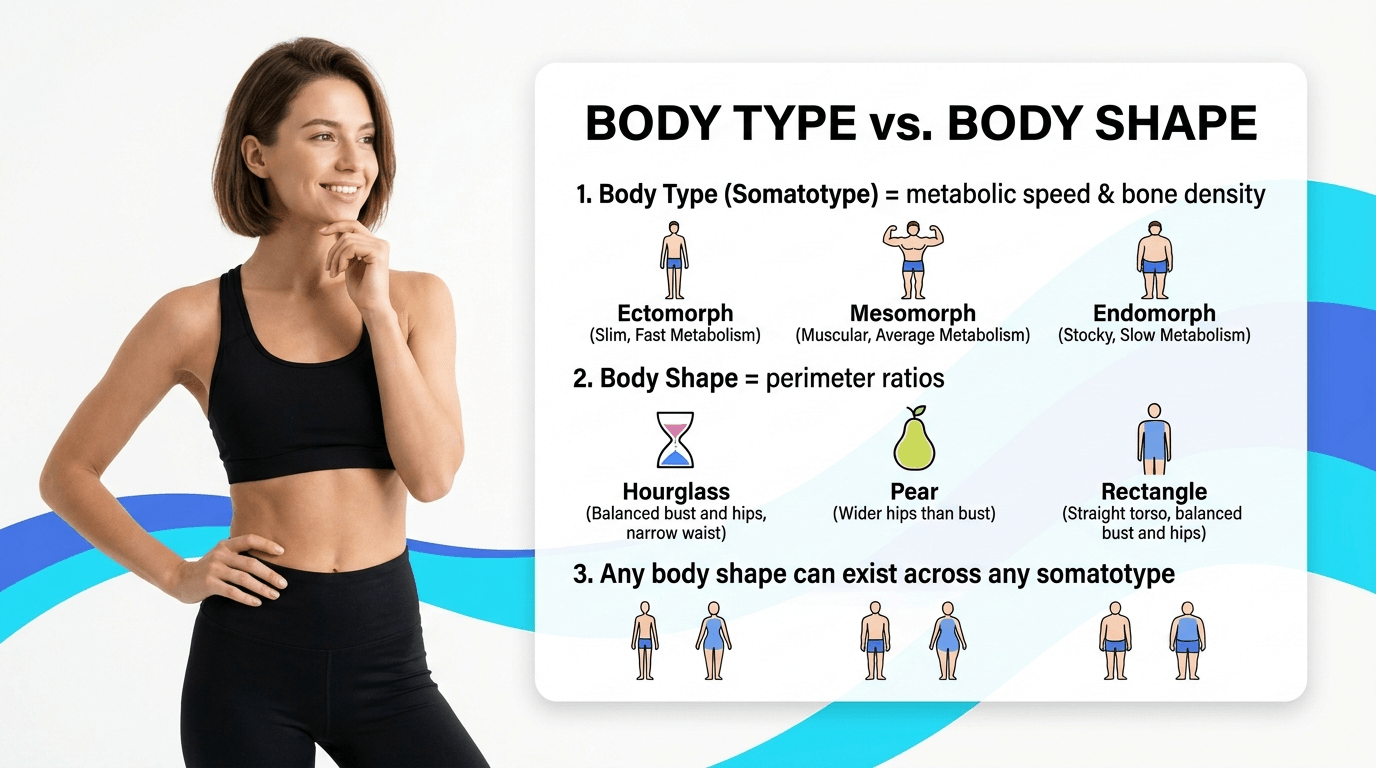
Formulated upon the Heath-Carter Somatotype System and contemporary 3D surface scanning anthropometry. Unravels the frequent confusion between metabolic constitution (Ectomorph, Mesomorph, Endomorph) and geometric apparel silhouettes (Hourglass, Pear, Rectangle, Apple).
Body Type vs. Body Shape: What Is the Difference? (Direct Answer)
While often used interchangeably in casual conversation, Body Type (Somatotype) and Body Shape (Geometric Silhouette) measure completely different physiological dimensions:
- Body Type (Somatotype): Refers to your metabolic, skeletal, and muscular constitution—traditionally categorized into Ectomorph (lean, light bone structure, fast metabolism), Mesomorph (athletic, naturally muscular, medium bone density), and Endomorph (sturdier bone structure, slower metabolism, higher propensity for fat storage).
- Body Shape (Silhouette): Refers to the horizontal proportional ratios between your shoulders/bust, natural waist, and hips (Hourglass, Pear, Rectangle, Apple, Inverted Triangle, Diamond).
You can exist in any combination: an Endomorphic Hourglass has a full figure with distinct waist indentation, an Ectomorphic Pear is slender on top with wider hips, and a Mesomorphic Rectangle is lean, muscular, and straight-waisted.
Discover your exact geometric shape using our interactive Body Shape Calculator.
Comparison Matrix: Somatotypes vs. Geometric Silhouettes
| Feature | Body Type (Somatotype) | Body Shape (Silhouette) |
|---|---|---|
| Scientific Origin | W.H. Sheldon (1940); refined by Heath & Carter (1967). | Ergonomic apparel engineering and 3D surface scanning. |
| Primary Focus | Bone density, metabolic responsiveness, muscle hypertrophy. | Bust, waist, and hip proportional circumferences. |
| Primary Utility | Athletic conditioning, macronutrient splits, sports physiology. | Apparel tailoring, wardrobe styling, cardiometabolic WHR risk. |
| Stability Over Time | Partially shifts with age, training, and hormonal stages. | Relatively fixed by skeletal bone width and genetic fat depots. |
The 3 Classic Somatotypes Explained
1. Ectomorph
Long, slender limbs, narrow wrists and ankles, low subcutaneous fat, and a fast metabolic rate. Typically lines up with rectangular or linear silhouettes.
2. Mesomorph
Broad shoulders, narrow waist, dense bone structure, and responsive muscle hypertrophy. Naturally predisposed toward hourglass, inverted triangle, or trapezoid profiles.
3. Endomorph
Wider ribcage and pelvic bones, softer musculature, slower carbohydrate tolerance, and elevated lipid storage. Frequently aligns with full hourglass, pear, or apple shapes.
Find Your Exact Body Shape Silhouette
Plug your tape measurements into our algorithm to calculate your true geometric proportion score and personalized styling recommendations.
Educational Disclaimer: ToolWingz provides ratio calculations for health awareness and styling purposes.