

Does Diet Soda Spike BAC Faster? Alcohol Absorption Pharmacology Explained
The clinical pharmacology of diet soda mixers: why artificial sweeteners accelerate gastric emptying and spike blood alcohol faster than sugar-sweetened drinks.
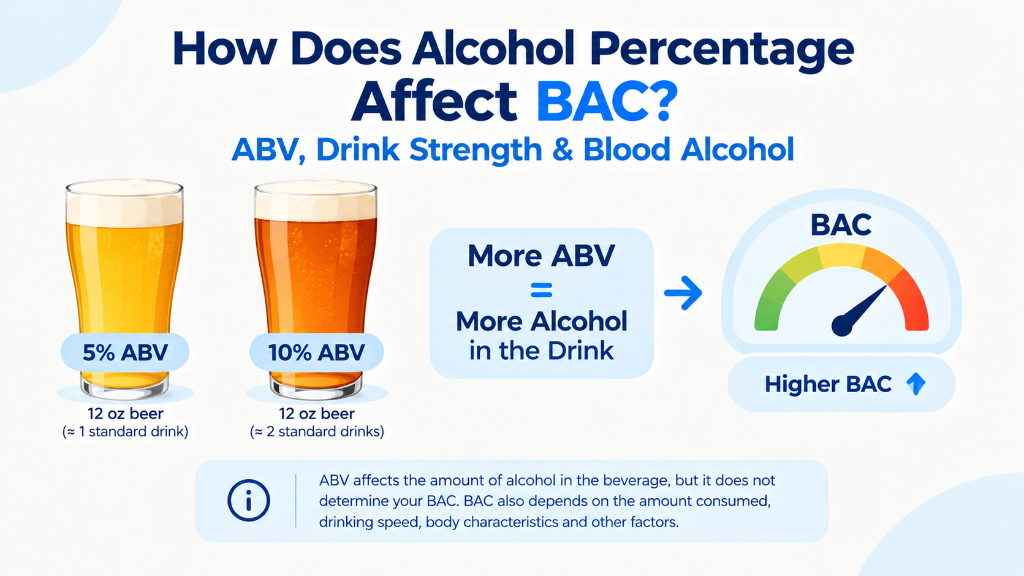
Derived from controlled clinical trials published in Alcoholism: Clinical and Experimental Research, peer-reviewed pharmacokinetic studies by Northern Kentucky University, and breathalyzer comparative absorption models.
Does Mixing Alcohol with Diet Soda Spike BAC Faster? (Direct Answer)
Yes. Controlled clinical trials confirm that mixing alcohol with diet soda produces a significantly faster rise in BAC and a substantially higher peak blood alcohol concentration compared to mixing the exact same volume of alcohol with regular sugar-sweetened soda.
In landmark double-blind clinical trials, participants who drank vodka mixed with diet soda reached peak BAC levels that were 18% to 25% higher than those who consumed vodka with regular soda. In multiple trial participants, the regular soda mixer kept them safely below the 0.08% legal driving limit (averaging 0.077% BAC), whereas the diet soda pushed them well into criminal DUI territory (averaging 0.091% BAC).
The root biological cause is gastric emptying physiology: your stomach recognizes real sugar as nutritional food and delays emptying into the small intestine, whereas artificial sweeteners trigger zero caloric retention, allowing alcohol to rush directly into the bloodstream. To model your personal BAC curves, explore our Toolwingz BAC Calculator.
The Science of Gastric Emptying: Why Sugar Slows Absorption
The stomach absorbs only a tiny fraction (roughly 10%–20%) of consumed alcohol. The remaining 80%–90% is rapidly absorbed in the duodenum and jejunum of the small intestine, which possesses an enormous mucosal surface area:
The Pyloric Sphincter Gatekeeper
Between the stomach and the small intestine sits the muscular pyloric sphincter valve. The stomach is equipped with osmoreceptors and chemoreceptors that detect caloric density.
When you drink a cocktail made with regular soda or tonic water (containing 35–45 grams of real sucrose or high-fructose corn syrup), the stomach detects calories. The pyloric sphincter tightens, holding the liquid inside the stomach for active enzymatic digestion. Alcohol is released into the small intestine in a slow, controlled drip.
In stark contrast, when you drink with diet soda (sweetened with aspartame, sucralose, or acesulfame potassium), the stomach registers zero calories. It treats the cocktail like plain water, opening the pyloric sphincter and dumping the alcohol straight into the small intestine, triggering a massive, rapid BAC spike.
Controlled Clinical Trial Results: Diet vs. Regular Soda Mixers
Findings from peer-reviewed pharmacokinetic trials comparing identical alcohol doses (e.g., 1.97 ml/kg of 40% ABV vodka):
| Pharmacokinetic Metric | Alcohol + Regular Soda (Sugar) | Alcohol + Diet Soda (Artificial) | Net Physiological Difference |
|---|---|---|---|
| Peak Mean BAC | 0.077% BAC | 0.091% BAC | +18% higher with diet mixer |
| Time to Peak BAC (Tmax) | 52 minutes | 38 minutes | Peaked 14 minutes faster |
| Legal Driving Status | Below 0.08% limit | Above 0.08% DUI limit | Difference between driving home and a DUI arrest |
| Subjective Intoxication Rating | Reported feeling “moderately buzzed” | Reported feeling the exact same level | Drinkers could not perceive they were more impaired |
Real-World Scenarios: Rum & Diet vs. Rum & Regular
Comparing two 150 lb (68 kg) individuals drinking 3 mixed cocktails over 90 minutes:
Chloe (3 Rum & Diet Cokes)
- Mixer Used: Diet Coke (0 calories, sweetened with aspartame).
- Pyloric Sphincter: Remains wide open; alcohol flushes into small intestine.
- Peak BAC: 0.088% BAC at 45 minutes.
- Roadside Reality: Fails preliminary breath test, arrested for per se DUI.
Emma (3 Rum & Regular Cokes)
- Mixer Used: Regular Coke (117g sucrose and corn syrup).
- Pyloric Sphincter: Constricts; stomach holds liquid for enzymatic digestion.
- Peak BAC: 0.071% BAC at 65 minutes.
- Roadside Reality: Remains legally below the 0.08% driving limit.
Mixer Speed Ranking: Fastest to Slowest Absorption
How different cocktail mixers manipulate your stomach's emptying rate:
Diet Soda & Seltzers
Zero calories + carbonation = maximum gastric emptying speed. Delivers alcohol into blood in under 10 minutes.
Regular Soda & Tonic
High sugar content activates pyloric osmoreceptors, creating an 18% to 25% lower peak BAC curve.
Juice, Milk & Cream Drinks
Fats, proteins, and complex carbohydrates trigger maximum gastric retention, blunting sharp BAC spikes.
The Hidden Hazard: The Subjective Perception Gap
Why Diet Drinkers Are at Extreme Risk of DUI Arrests
The most alarming finding of the clinical trials was psychological: although diet soda drinkers had significantly higher objective BAC levels and objectively slower reaction times, they did not feel any more intoxicated than the regular soda group.
Because people often order diet cocktails to save calories, they assume their drink count has the same safety margin as a normal cocktail. In reality, switching to diet soda can elevate a 0.07% BAC into a 0.09% DUI without the driver feeling any different.
Diet soda saves calories, but spikes your blood alcohol faster.
Because artificial sweeteners bypass gastric digestion, alcohol enters the small intestine and bloodstream rapidly. If you mix with diet sodas, treat every drink as 20% more potent than a sugar-sweetened equivalent.
Estimate Your BAC with the Toolwingz BAC Calculator
Calculate theoretical blood alcohol curves and explore how body weight, drink strength, and elapsed time influence clearance with 100% privacy.
Educational Disclaimer: Toolwingz BAC Calculator provides an estimate for informational purposes. It does not measure your actual BAC and cannot determine whether you are safe or legally permitted to drive.