Hangover Severity vs. BAC Elimination: Why Symptoms Peak at Zero Alcohol
Understand the biological paradox of hangovers: why symptoms are most severe when blood alcohol reaches 0.00% and how immune cytokines drive misery.
Derived from clinical research published by the Alcohol Hangover Research Group (AHRG), the Annals of Internal Medicine, and peer-reviewed immunological studies in Addiction Biology.
Why Does a Hangover Peak When Your BAC Drops to Zero? (Direct Answer)
It is one of the most agonizing paradoxes in human pharmacology: hangover symptoms reach their absolute maximum clinical peak precisely when your Blood Alcohol Concentration (BAC) returns to 0.00%.
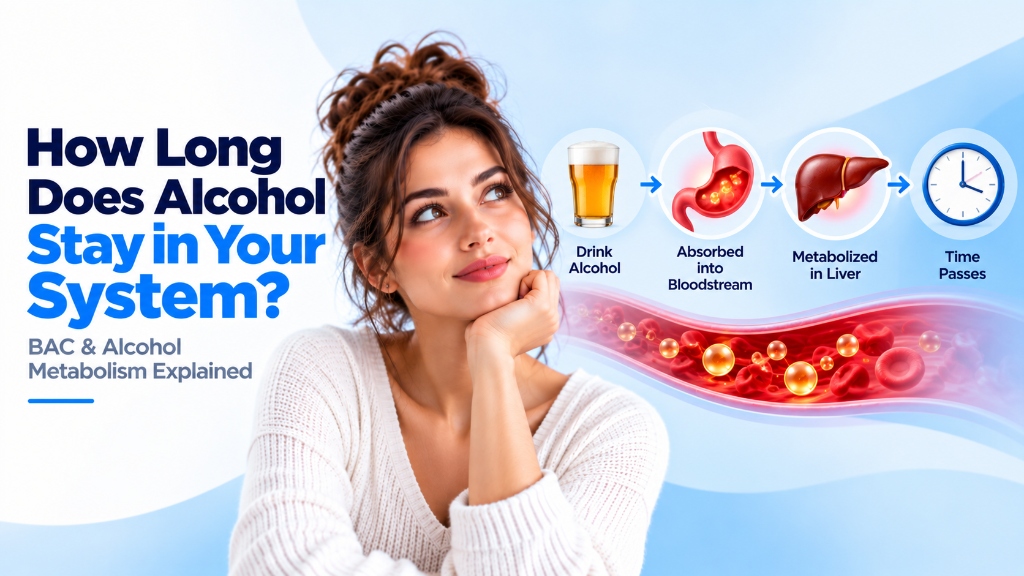
While alcohol is actively circulating in your blood, its sedative and dopaminergic actions blunt pain, numb anxiety, and mask physiological stress. But as the liver eliminates the final drops of ethanol from hepatocytes, the body undergoes a violent neurochemical and immunological crash:
- Acute Neurochemical Rebound: GABA receptors downregulate while excitatory glutamate receptors surge, causing light hypersensitivity, tremors, nausea, tachycardia, and “hangxiety.”
- Pro-Inflammatory Cytokine Cascade: Ethanol breakdown triggers a systemic immune inflammatory storm (surges in Interleukin-6 and TNF-alpha) identical to a severe viral flu.
- Toxic Congener & Formaldehyde Production: Once ethanol reaches zero, the liver begins breaking down toxic beverage congeners (such as trace methanol) into highly irritant formaldehyde and formic acid.
A hangover is not merely “thirst from dehydration”—it is an acute inflammatory, metabolic, and neurological rebound. To track when your BAC mathematically hits absolute zero, use our Toolwingz BAC Calculator.
The Biological Cascade: What Happens in the Body as BAC Drops
Follow the biological timeline from active evening drinking to the morning peak of misery:
Active Intoxication
Vasopressin (anti-diuretic hormone) is suppressed. For every 1g of alcohol, kidneys excrete 10ml of water, flushing electrolytes into urine.
REM Sleep Disruption
Liver eliminates alcohol at 0.015%/hr. Circulating ethanol destroys sleep architecture, preventing restorative delta wave and REM sleep.
Glutamate Rebound
BAC hits 0.00%. Blood sugar plunges due to impaired gluconeogenesis. Brain excitability triggers blinding headaches and sound sensitivity.
Cytokine Peak
Interleukin-6 peaks 12–16 hours post-drinking. Severe systemic inflammation causes heavy fatigue, muscle stiffness, and cognitive fog.
Hangover Myths vs. Clinical Scientific Evidence
Separating popular folklore from validated medical biochemistry:
| Popular Hangover Myth | Scientific Reality | Clinical Mechanism |
|---|---|---|
| “Hangovers are just severe dehydration” | FALSE | Hydration cures dry mouth and thirst, but cytokine inflammation, sleep fragmentation, and glutamate rebound remain completely uncorrected. |
| “Hair of the dog (drinking more) cures it” | DANGEROUS TRAP | Drinking re-elevates BAC, temporarily numbing glutamate rebound and delaying the inevitable crash while escalating liver toxicity. |
| “Dark liquors cause worse hangovers than clear” | TRUE | Bourbon and dark rum contain up to 37 times more toxic congeners (methanol, tannins, fusel oils) than distilled vodka. |
| “Taking Tylenol (acetaminophen) is safe for headaches” | TOXIC RISK | Alcohol induces CYP2E1 enzymes, converting acetaminophen into NAPQI, a potent hepatotoxin causing acute liver necrosis. |
| “Greasy food the next morning soaks up alcohol” | MYTH | By morning, 100% of the alcohol is already in the bloodstream or cleared. Greasy meals merely aggravate an inflamed stomach lining. |
Real-World Scenarios: Clear Liquor vs. High-Congener Bourbon
Comparing the next-morning hangover index of two identical 175 lb (79 kg) drinkers with equal total ethanol intake:
James (5 Pours of Aged Kentucky Bourbon)
- Alcohol Dose: 70g pure ethanol + heavy load of methanol, acetone, and oak tannins.
- Bedtime BAC: 0.11% BAC.
- Morning BAC (8:00 AM): 0.00% BAC.
- The Methanol Shunt: As ethanol hits zero, liver oxidizes methanol into formaldehyde and formic acid.
- Hangover Severity: Severe 9/10 (Throbbing headache, severe nausea, light intolerance).
Alex (5 Vodka Sodas with Lime)
- Alcohol Dose: 70g pure ethanol + zero methanol, trace congeners.
- Bedtime BAC: 0.11% BAC (Identical blood alcohol).
- Morning BAC (8:00 AM): 0.00% BAC.
- Metabolic Burden: Liver only has to clear ethanol and acetic acid. Zero formaldehyde production.
- Hangover Severity: Mild 3/10 (Mild fatigue, slight dry mouth, easily functional).
Beverage Congener Ranking: Lowest to Highest Hangover Severity
How common alcoholic drinks rank in toxic congener content per 100ml:
Vodka & Gin
Multiple distillations and carbon filtration remove virtually all fusel oils and methanol. Produces the least severe morning symptoms.
Beer & White Wine
Fermentation creates moderate amounts of acetaldehyde and tannins. Results in intermediate next-day fatigue and dehydration.
Bourbon, Rum & Red Wine
Wood-barrel aging yields maximum methanol, acetone, and polyphenols, triggering blinding headaches and multi-day hangovers.
Evidence-Based Recovery Protocols: What Actually Helps
Because hangovers are a multi-system biological storm, single “miracle cures” do not exist. However, clinical research supports these interventions:
- Electrolytes with Fast-Acting Glucose: Oral rehydration salts (ORS) containing sodium, potassium, and glucose restore cellular osmolarity and boost low blood sugar.
- Complex Carbohydrates & Eggs: Eggs are rich in cysteine, an amino acid essential for synthesizing glutathione—the liver's primary defense to break down lingering acetaldehyde.
- Restorative Catch-Up Sleep: Because alcohol suppresses restorative REM sleep, taking a 90-minute afternoon nap in a dark, quiet room significantly accelerates cognitive neuro-recovery.
A zero BAC is the beginning of the hangover, not the end.
When alcohol clears, neurochemical rebound, congener breakdown, and immune inflammation take over. The only true medical cure for a hangover is time, hydration with complex nutrition, and rest.
Estimate Your BAC with the Toolwingz BAC Calculator
Calculate theoretical blood alcohol curves and explore how body weight, drink strength, and elapsed time influence clearance with 100% privacy.
Educational Disclaimer: Toolwingz BAC Calculator provides an estimate for informational purposes. It does not measure your actual BAC and cannot determine whether you are safe or legally permitted to drive.