

How Pregnancy & Postpartum Permanently Change Your Body Shape
The science of postpartum body shape shifts: relaxin hormone bone widening, ribcage remodeling, and re-measuring your updated proportions.
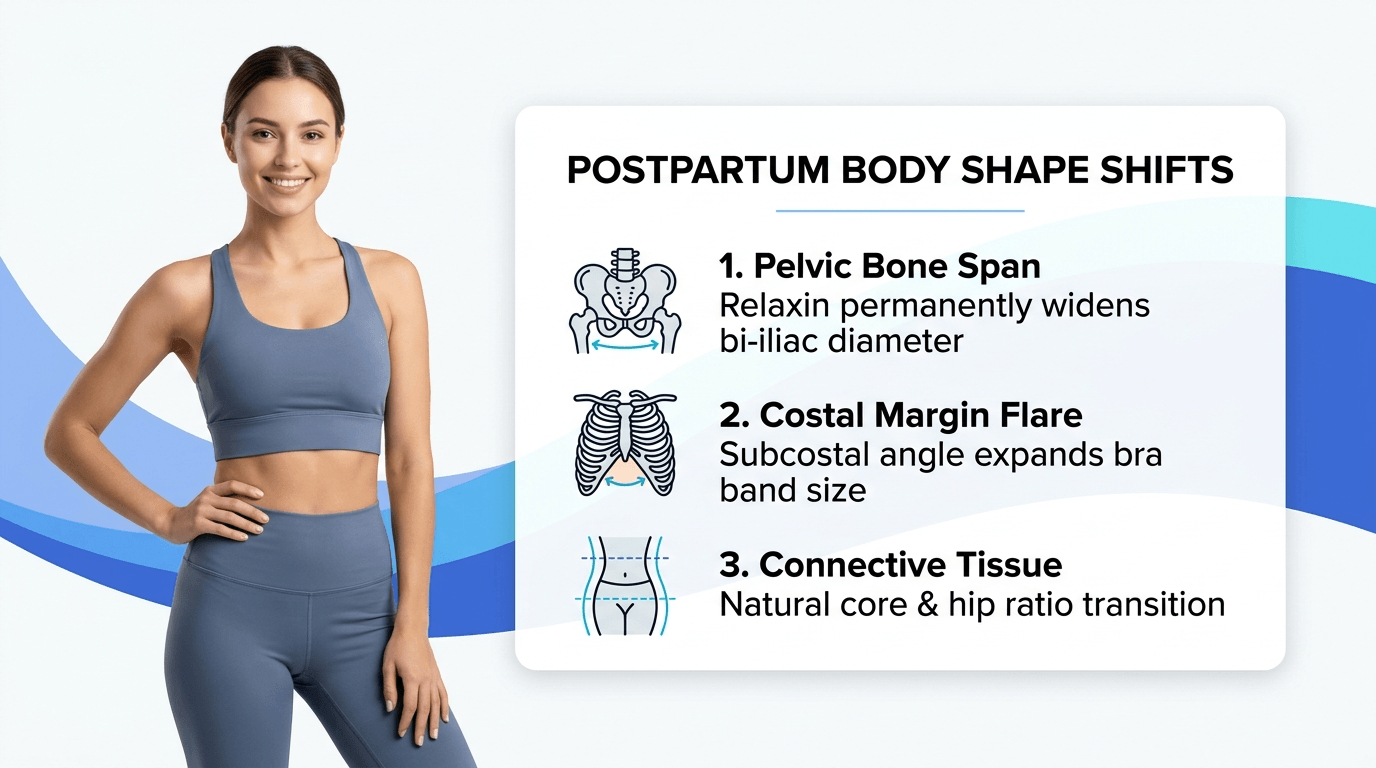
Constructed upon clinical maternal-fetal biomechanics and postpartum kinanthropometry. Explains why postpartum silhouette alterations are driven primarily by permanent skeletal widening (pelvic laxity and costal margin expansion), not simply weight retention.
How Pregnancy & Postpartum Change Your Body Shape (Direct Answer)
Pregnancy does not merely cause temporary weight gain; it induces permanent skeletal, connective tissue, and hormonal adaptations that alter your underlying body shape ratios:
- Pelvic Widening (Relaxin Hormone): The hormone relaxin softens the sacroiliac ligaments and symphysis pubis to facilitate childbirth. In many women, the bi-iliac bone diameter remains 1 to 2 inches wider permanently, shifting an athletic rectangle into a pear or hourglass.
- Permanent Rib Cage Expansion: To accommodate the upward growth of the uterus, the subcostal angle expands, broadening the ribcage circumference by 2 to 3+ inches. This increases the resting underbust and natural waist measurement even after returning to pre-baby weight.
- Diastasis Recti (Core Separation): The linea alba stretches, separating the left and right rectus abdominis bellies. Without deep core rehab, this reduces resting abdominal wall tone, softening waist taper.
Check your updated postpartum measurements using our interactive Body Shape Calculator.
The 3 Permanent Architectural Shifts
1. Pelvic Bone Span
Ligament laxity can permanently alter the angle at which the iliac wings and femoral heads sit, causing pre-pregnancy pants to feel tight across the hip bones even at lower body weight.
2. Costal Angle Flare
The lower ribs permanently remodel slightly outward to make space for pulmonary function during late gestation, frequently increasing bra band sizes from a 32 to a 34 permanently.
3. Gynoid Depot Shifts
Elevated prolactin and progesterone prime the lower body for lactation energy reserves, depositing dense subcutaneous adipose into the lower glutes and upper thighs.
Common Postpartum Silhouette Transitions
Rectangle to Pear / Hourglass
Women with narrower athletic frames frequently discover that pelvic widening gives them their first defined waist-to-hip curve, transitioning them into an authentic pear or hourglass shape.
Hourglass to Oval / Spoon
If diastasis recti and costal margin expansion soften the midsection taper while hips widen, an hourglass may shift into a spoon or high-shelf silhouette.
Calculate Your New Postpartum Proportions
Honor your body’s new architectural reality. Input your updated measurements into our calculator for objective silhouette classification and customized tailoring advice.
Educational Disclaimer: ToolWingz provides body shape and ratio analysis for maternal health and styling awareness.