

Metabolic vs. Functional Tolerance: Why "Holding Your Liquor" Won't Save Your BAC
Exposing the high-tolerance myth: why feeling sober doesn’t lower your chemical BAC, brain adaptation vs. liver clearance, and per se DUI statutes.
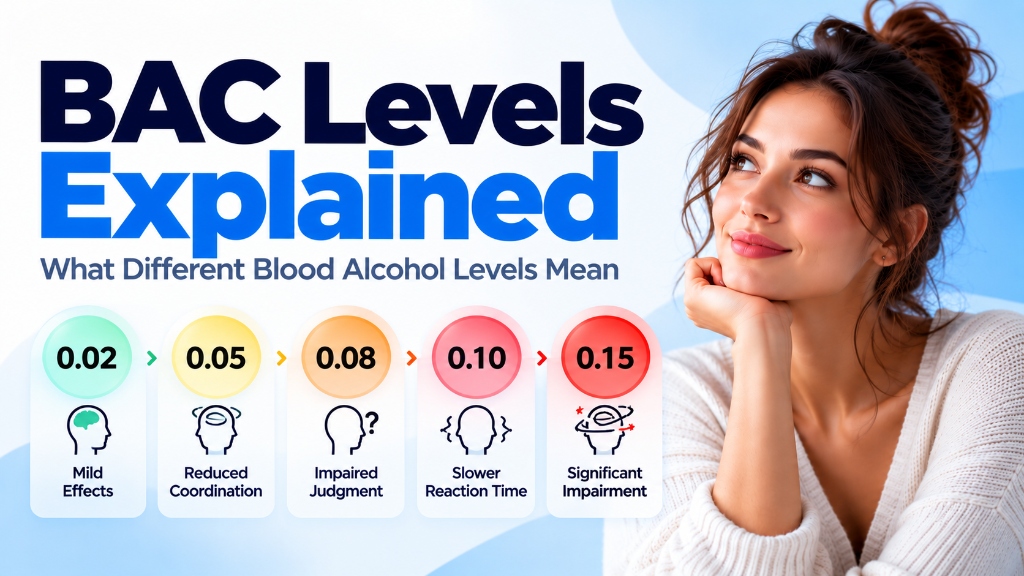
Derived from clinical neuroadaptation research by the National Institute on Alcohol Abuse and Alcoholism (NIAAA), forensic standards from the National Highway Traffic Safety Administration (NHTSA), and peer-reviewed pharmacology in Neuropsychopharmacology.
Metabolic vs. Functional Tolerance: Does High Tolerance Lower Your BAC? (Direct Answer)
No. Having a “high alcohol tolerance” does NOT lower your Blood Alcohol Concentration (BAC) or protect you from being arrested for driving under the influence (DUI).
One of the most persistent and deadly myths in alcohol culture is that experienced heavy drinkers can safely operate a motor vehicle because they “hold their liquor well.” In reality, neuroscientists and forensic toxicologists divide tolerance into two completely different biological mechanisms:
- Functional (Behavioral) Tolerance: The brain adapts to chronic alcohol bombardment by downregulating GABA-A receptors and upregulating NMDA glutamate receptors. The drinker learns to mask obvious outward signs of intoxication—speaking without slurring and walking in an apparently straight line at a 0.15% BAC. However, their critical reaction times, divided attention, visual tracking, and cognitive decision-making remain severely compromised.
- Metabolic (Pharmacokinetic) Tolerance: The liver slightly upregulates the microsomal CYP2E1 enzyme system. However, this increases hepatic clearance by a negligible fraction (at most boosting hourly clearance from 0.015% to 0.018%–0.020% in chronic alcoholics).
In traffic court, DUI statutes are strictly per se: if your chemical BAC is 0.08%, you are guilty of a criminal DUI regardless of how sober you look, speak, or feel. To calculate true biological BAC curves, explore our Toolwingz BAC Calculator.
Functional vs. Metabolic Tolerance: The Two Brain & Liver Pathways
How the body attempts to maintain homeostasis under chronic alcohol bombardment:
The Functional Tolerance Paradox (Neural Compensation)
When someone drinks frequently, brain neurons downregulate GABA-A receptor density and internalize receptor subunits. At the same time, the brain synthesizes more excitatory NMDA glutamate receptors to fight against alcohol's depressant effects.
As a result, it takes far more alcohol to produce the subjective feeling of being “drunk.” But while gross motor control can be consciously compensated for, microsecond cognitive reflexes cannot be trained. In an emergency braking scenario on the highway, a high-tolerance driver at 0.08% experiences the same fatal delay in pedal application as a novice drinker.
Functional vs. Metabolic Tolerance: Side-by-Side Comparison
Breaking down how these two mechanisms operate:
| Dimension | Functional (Behavioral) Tolerance | Metabolic (Pharmacokinetic) Tolerance |
|---|---|---|
| Primary Organ Involved | Brain & Central Nervous System | Liver (Hepatic Microsomes) |
| Impact on Breathalyzer BAC | ZERO (Chemical BAC is completely unaffected) | Negligible increase in hourly clearance rate |
| Subjective Sensation | Feels “completely sober” at 0.12% BAC | No change in subjective buzz perception |
| Legal DUI Defense Value | 100% INADMISSIBLE in per se DUI cases | 100% INADMISSIBLE |
Real-World Scenarios: The High-Tolerance Driver Trap
Comparing two 180 lb (81.5 kg) individuals stopped at a police sobriety checkpoint:
Dan (Daily Drinker, 6 IPAs Consumed)
- Subjective Feeling: Completely clear-headed, speaks calmly with zero slurring.
- Roadside Behavior: Passes the walk-and-turn test via practiced muscle memory.
- Breathalyzer Reading: 0.13% BAC.
- Legal Result: Immediately handcuffed and charged with per se DUI. Tolerance argument rejected by judge.
Ben (Occasional Drinker, 2 Beers Consumed)
- Subjective Feeling: Feels giggly, lightheaded, and noticeably buzzed.
- Roadside Behavior: Slightly wobbly on one-leg stand test due to nervousness.
- Breathalyzer Reading: 0.038% BAC.
- Legal Result: Well below the legal 0.08% threshold. Given safety advice and allowed to proceed.
Drink Escalation & The Tolerance Treadmill
How brain adaptation forces escalating drink counts while organ damage compounds:
2 to 3 Drinks (Novice)
Normal brain sensitivity. Produces pleasant social buzz; natural tiredness signals when to stop drinking.
4 to 6 Drinks (Adapted)
Brain desensitizes GABA. Drinker requires 5 drinks to feel what 2 used to do. Liver absorbs 2.5× the oxidative stress.
8+ Drinks (Heavy)
Severe functional tolerance. Appears functional at 0.20% BAC while liver cirrhosis and cardiomyopathy progress silently.
The Hidden Trap: Why High Tolerance Accelerates Organ Damage
Having high tolerance is not a biological advantage—it is a dangerous medical risk factor:
- Dose Escalation: Because the brain feels less buzz, the drinker consumes 6 to 10 drinks to achieve the same euphoria that a novice gets from 2 drinks.
- Severe Internal Organ Toxicity: While the brain learns to function at high BAC, the liver, pancreas, heart, and cardiovascular system cannot develop tolerance. They absorb 100% of the oxidative and carcinogenic damage of the increased ethanol volume.
High tolerance tricks your mind, but never tricks a breathalyzer.
Feeling sober after multiple drinks does not mean you are safe or legally permitted to drive. Your blood alcohol concentration reflects your exact drink count and body mass—never your personal tolerance.
Estimate Your BAC with the Toolwingz BAC Calculator
Calculate theoretical blood alcohol curves and explore how body weight, drink strength, and elapsed time influence clearance with 100% privacy.
Educational Disclaimer: Toolwingz BAC Calculator provides an estimate for informational purposes. It does not measure your actual BAC and cannot determine whether you are safe or legally permitted to drive.