

Rectangle (Banana) Body Shape: Measurements, Styling & Waist Definition
Everything you need to know about the athletic rectangle body shape: ratio benchmarks, runway model genetics, and how to create optical waist curvature.
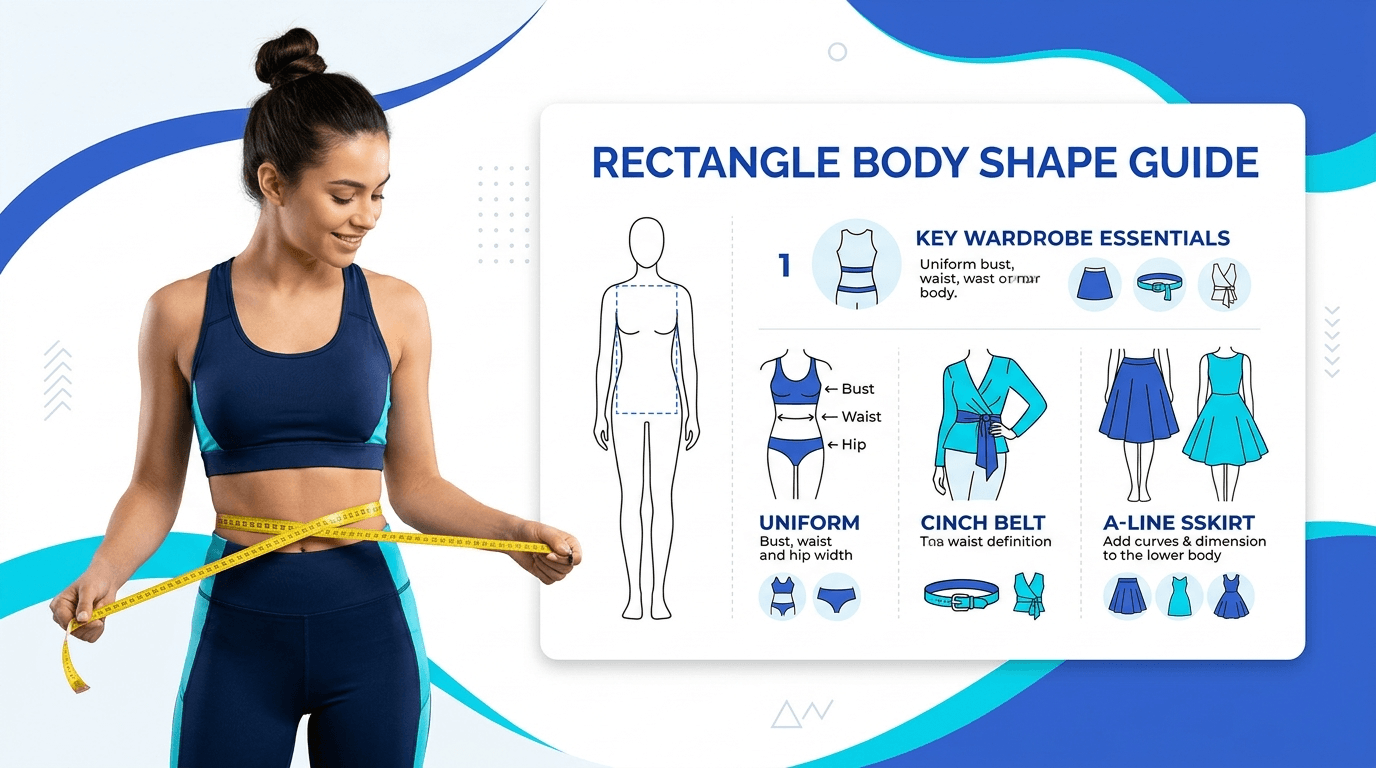
Derived from the SizeUSA anthropometric database covering over 10,000 scanned subjects. Demonstrates why the rectangular (ruler/athletic) silhouette is the prevailing global human morphology, accounting for nearly 46% of the female population.
What Is the Rectangle (Banana) Body Shape? (Direct Answer)
The Rectangle body shape (frequently referred to as the Banana, Ruler, or Athletic silhouette) is characterized by a balanced, linear alignment where the bust, waist, and hips share nearly identical circumferences without an exaggerated inward waist pinch.
In algorithmic anthropometric analysis:
- Uniform Circumferences: Your bust, waist, and hip measurements all fall within 5% of each other.
- Subtle Waist Pinch: Your natural waist measurement is less than 8 inches (20 cm) smaller than your hips and bust.
- Waist-to-Hip Ratio (WHR): The ratio typically registers at 0.80 or above (e.g., a 30-inch waist divided by 36-inch hips yields 0.833).
To verify whether your tape numbers place you in the rectangle or inverted triangle category, use our interactive Body Shape Calculator.
Mathematical Ratio Thresholds for Rectangle Shapes
Apparel pattern grading algorithms classify a physique as a rectangle when it matches the following statistical benchmarks:
| Measurement Pair | Calculated Ratio | Visual Manifestation |
|---|---|---|
| Waist / Hips | 0.80 ≤ (Waist / Hips) < 0.90 | Torso sides fall in an unbroken, vertical line from ribs to pelvis. |
| Bust / Hips | 0.95 ≤ (Bust / Hips) ≤ 1.05 | Upper torso and lower torso present equal optical weight. |
| Waist / Bust | (Waist / Bust) > 0.75 | No drastic hourglass taper between underbust and navel. |
Skeletal Architecture: Why Rectangles Possess High Runway Model Versatility
The rectangular silhouette is the preferred baseline for high-fashion runway modeling and haute couture draping. There are sound anatomical reasons for this:
- Cylindrical Rib Cage: The rib cage does not flare outward sharply at the 10th rib, allowing tailoring lines to fall straight down without twisting.
- Narrow Bi-Iliac Span: The pelvic iliac wings are oriented more vertically rather than flaring laterally, creating a sleek, athletic lower frame.
- Equally Distributed Adipose Depots: Adipose tissue distributes smoothly across the torso, arms, and lower limbs rather than clustering exclusively in gluteal or abdominal pockets.
Case Study: Athletic Rectangle vs. Classic Hourglass
Bust 35″ | Waist 30″ | Hips 36″
- • Bust / Hip Ratio: 35 / 36 = 0.972 (Perfect balance)
- • Waist / Hip Ratio: 30 / 36 = 0.833 (Rectangle threshold ≥ 0.80)
- • Waist Reduction: Only 5 to 6 inches difference from bust/hips
- • Diagnosis: Pure Linear Rectangle (Athletic/Ruler).
Bust 35″ | Waist 25″ | Hips 36″
- • Bust / Hip Ratio: 35 / 36 = 0.972 (Identical upper/lower balance)
- • Waist / Hip Ratio: 25 / 36 = 0.694 (Dramatic waist pinch)
- • Waist Reduction: Full 10 to 11 inches indentation
- • Diagnosis: Classic Hourglass (X-Shape).
How to Create Optical Curves on a Rectangle Frame
1. Cinched Belts & Peplums
Wide belts placed over knit dresses and peplum blouses create an artificial focal pinch while immediately flaring out toward the hips.
2. Pleated & Wide Trousers
High-waisted trousers with front pleats, paperbag waists, or flare silhouettes introduce volume at the hips and legs to balance the straight torso.
3. Sculpted Necklines
Sweetheart, cowl, and scoop necklines soften the angularity of the collarbones and bustline, creating natural visual curves.
Calculate Your Body Proportions on ToolWingz
Test your measurements in our ergonomic calculator to verify whether your waist-to-hip ratio meets the athletic rectangle benchmark.
Educational Disclaimer: ToolWingz provides ratio calculations for health awareness and styling purposes.