

Short Torso vs. Long Torso: How to Measure Vertical Body Proportions
Vertical proportion analysis: test whether you have a short or long torso, understand the Cormic Index, and style pants rises with precision.
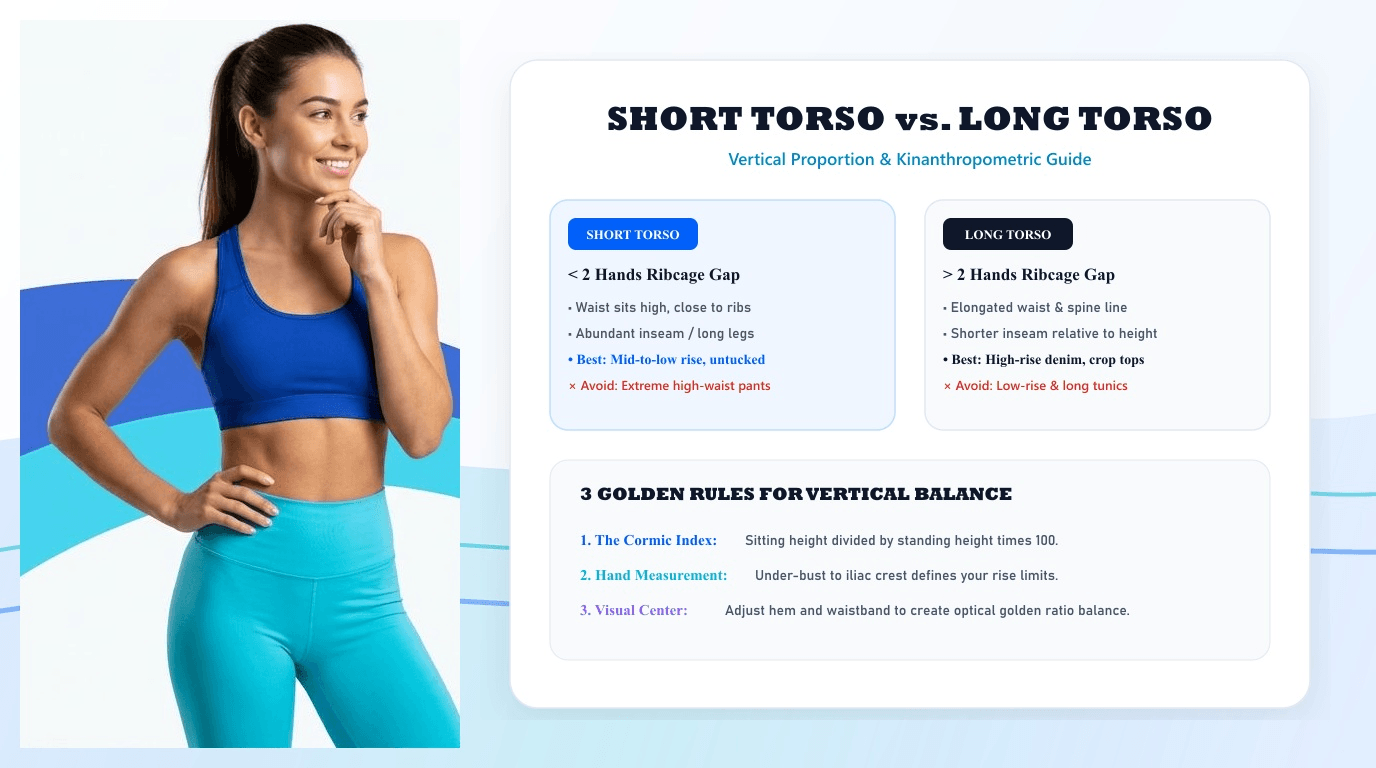
Constructed upon clinical kinanthropometric sitting-height ratios (Cormic Index) and rib-to-iliac anatomical measurements. Explains why two people with identical horizontal circumferences look completely different in apparel based on vertical torso-to-leg proportions.
Short Torso vs. Long Torso: What It Means (Direct Answer)
Your vertical proportion classifies the ratio between your torso length (from clavicle to pelvic crease) and your leg length (from hip joint to floor):
- Short Torso (Long Legs): The ribcage sits very close to the pelvis. High-rise trousers often hit directly beneath the bra band, and waistbands tend to feel crowded. Leg inseams are unusually long relative to overall height.
- Long Torso (Short Legs): A wide expanse of space separates the lowest rib from the pelvic bone. Low-rise and mid-rise pants feel comfortable, but jumpsuits and one-piece bathing suits often pull uncomfortably at the crotch and shoulders.
- Balanced Torso: The midpoint of your total standing height aligns precisely with your hip joints, allowing standard garment rises to fall naturally.
You can verify your horizontal ratios first with our interactive Body Shape Calculator.
How to Determine Your Vertical Proportions: 2 Tests
1. The Rib-to-Hip Hand Test
Place your hand horizontally directly underneath your lowest palpable rib, palm facing your stomach:
- • Fewer than 2 fingers fit: Anatomically Short Torso.
- • 2 to 3 fingers fit: Balanced Proportions.
- • 4 or more fingers fit (or two stacked hands): Anatomically Long Torso.
2. The Cormic Index (Sitting Height Ratio)
Measure your sitting height (erect on a flat stool against a wall) divided by standing height multiplied by 100:
- • Index < 51%: Macrobrachycormic (Short torso, long limbs).
- • Index 51% – 53%: Metriocormic (Balanced).
- • Index > 53%: Brachyskelic (Long torso, shorter legs).
How to Balance Your Vertical Frame: Golden Rules
Styling a Short Torso
- • Opt for Mid-Rise Bottoms: 9 to 10-inch rises leave room for the ribcage to breathe.
- • Wear Tops Untucked: Or use a relaxed french tuck to visually lengthen the upper body.
- • V-Neck & Long Necklines: Draw the eye downward to create vertical space.
Styling a Long Torso
- • Embrace Ultra High Rises: 11 to 13-inch rises raise the optical waistline and lengthen legs.
- • Tuck in Your Shirts: Cleanly tucked blouses create an immediate upward focal point.
- • Cropped Jackets & Sweaters: Hemlines ending right at the natural waist shorten the torso.
Calculate Your Silhouette Ratios on ToolWingz
Combine your vertical proportion awareness with your horizontal tape measurements to calculate your complete body shape profile.
Educational Disclaimer: ToolWingz provides ratio calculations for health awareness and styling purposes.