

What Is a Lethal BAC? Fatal Thresholds and Alcohol Poisoning Stages
A clinical guide to alcohol poisoning toxicity: why 0.40% BAC is the human LD50, medullary brainstem depression, and critical emergency symptoms.
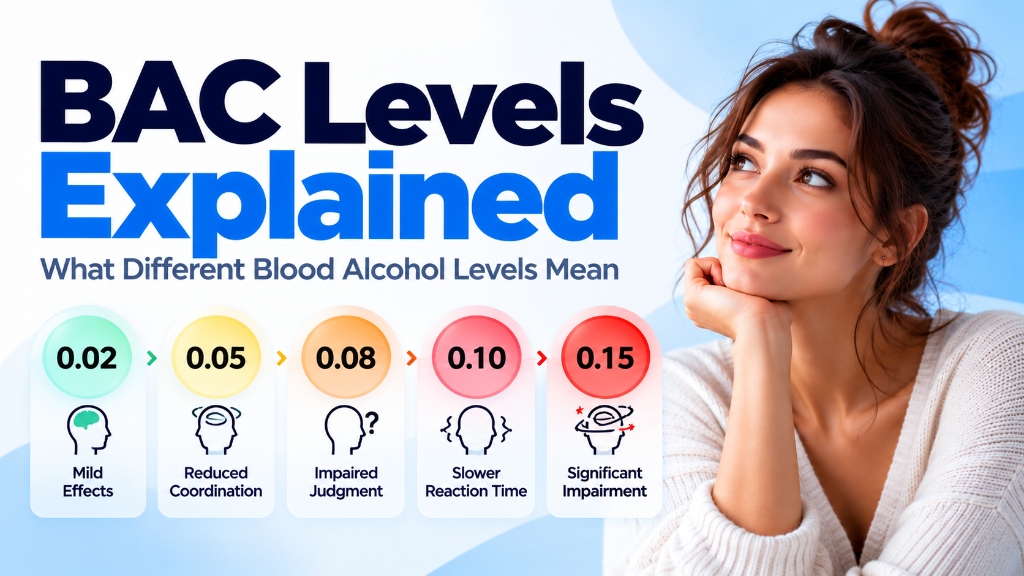
Compiled from emergency overdose triage criteria from the National Institute on Alcohol Abuse and Alcoholism (NIAAA), clinical intensive care guidelines from the American College of Emergency Physicians (ACEP), and post-mortem forensic toxicology studies.
What Is a Lethal BAC and When Does Alcohol Poisoning Turn Fatal? (Direct Answer)
In clinical forensic toxicology, a Blood Alcohol Concentration (BAC) of 0.40% (4.0 g/L or 400 mg/dL) is recognized as the median lethal dose—the human LD50. This means that at a 0.40% BAC, approximately 50% of adults will die without immediate emergency medical resuscitation and intensive mechanical airway support.
However, fatal alcohol poisoning can occur at concentrations significantly below 0.40% depending on rate of consumption, stomach contents, and personal physiology:
- 0.25% to 0.30% BAC: Severe stupor, blunted pupillary reflexes, total loss of pharyngeal gag reflex, and critical risk of fatal pulmonary aspiration (choking on vomit).
- 0.31% to 0.39% BAC: Unresponsive coma, severe hypothermia, metabolic acidosis, and profound respiratory depression (fewer than 8 breaths per minute).
- 0.40% to 0.50%+ BAC: Complete central nervous system shutdown, medullary respiratory arrest, cardiac standstill, and death.
Alcohol fatalities almost always occur because individuals consume large quantities of high-proof alcohol in a very brief window. Because gastric and duodenal absorption continues for 30 to 90 minutes after drinking stops, an individual who passes out with a seemingly survivable 0.22% BAC can silently rise to a lethal 0.40% while unconscious in bed. To model drink accumulation curves, explore our Toolwingz BAC Calculator.
How Alcohol Actually Kills: The 3 Fatal Mechanisms
Alcohol is an intoxicating central nervous system depressant that disrupts cellular membranes and neurotransmitter balance across three life-threatening physiological pathways:
1. Medullary Brainstem Respiratory Arrest
At extreme BAC levels, ethanol saturates GABA-A receptor sites throughout the medulla oblongata and pons—the primitive brain regions that maintain automatic life support.
The brainstem stops sensing rising carbon dioxide levels in the blood. Spontaneous breathing slows from a normal 12–18 breaths per minute down to 6, becomes shallow and irregular with long 15-second apneic pauses, and finally ceases entirely. Without immediate mechanical intubation, hypoxic brain death occurs within 4 to 6 minutes.
2. Paralyzed Gag Reflex & Asphyxiation on Emesis
Ethanol irritates the gastric mucosa, triggering strong, involuntary stomach contractions (vomiting). Simultaneously, high alcohol concentrations anesthetize the glossopharyngeal and vagus nerves, paralyzing the protective laryngeal cough and gag reflex.
If an unconscious individual is lying supine (on their back), acidic gastric contents flood the pharynx and are sucked directly into the trachea and lungs. The victim drowns in their own vomit—a silent, rapid mechanism of death that claims hundreds of young lives every year during binge parties.
3. Profound Hypothermia, Hypoglycemia & Cardiac Standstill
Alcohol forces widespread peripheral vasodilation. Warm blood rushes to skin capillaries, radiating vital core body heat into the ambient air. Core body temperature drops rapidly into hypothermia (< 95°F / 35°C), which impairs myocardial contractility and triggers fatal ventricular fibrillation.
Simultaneously, liver metabolism of alcohol consumes massive amounts of NAD+, halting hepatic gluconeogenesis. Blood glucose levels crater into severe hypoglycemia, starving brain neurons of energy and precipitating fatal status epilepticus seizures.
Clinical Toxicity Spectrum: BAC Stages from Intoxication to Death
Emergency department classification of acute alcohol toxicity milestones:
| BAC Range | Clinical Stage | Primary Neurological Symptoms | Mortality & Trauma Risk |
|---|---|---|---|
| 0.08% to 0.14% | Legal Impairment | Loss of peripheral vision, blunted reaction times, euphoria turning to ataxia. | Low direct toxicity (Severe crash risk) |
| 0.15% to 0.24% | Major Intoxication | Gross motor ataxia, slurred speech, double vision, memory blackouts begin. | Moderate (severe fall trauma risk) |
| 0.25% to 0.30% | Severe Stupor | Inability to stand or sit, mental confusion, vomiting, blunted protective reflexes. | HIGH (Fatal pulmonary aspiration) |
| 0.31% to 0.39% | Comatose State | Complete unconsciousness, unreactive to sternal rub, respiratory rate < 8/min. | CRITICAL: High probability of death |
| 0.40% to 0.50%+ | Human LD50 (Lethal) | Medullary respiratory arrest, bilateral pupil dilation, cardiac collapse. | EXTREME: 50%+ fatality without ICU life support |
Real-World Scenarios: How Rapid Drinking Turns Fatal
Comparing rapid binge drinking with paced consumption in a 160 lb (72.5 kg) individual:
10 Shots of 80-Proof Vodka in 45 Minutes
- Alcohol Ingested: 140 grams pure ethanol.
- BAC at Hour 1: 0.22% (Person passes out, friends leave them to sleep).
- Delayed Absorption: Stomach dumps remaining alcohol into small intestine while unconscious.
- BAC at Hour 2.5: 0.38% BAC (Comatose).
- Outcome: Breathing slows to 4 breaths/min; fatal respiratory arrest before morning.
4 Drinks Over 5 Hours with a Steak Dinner
- Alcohol Ingested: 56 grams pure ethanol.
- Food Effect: Pyloric sphincter delays gastric emptying; liver clears 0.015%/hr continuously.
- Peak BAC Reached: 0.052% BAC at Hour 2.
- BAC at Bedtime: 0.008% BAC (Returning safely to zero).
- Outcome: No danger of overdose, no gag reflex loss, restorative sleep protected.
How Many Drinks Can Reach a Lethal 0.35%–0.40% BAC?
Standard drink equivalents required to reach life-threatening blood alcohol concentrations:
14 to 18 Standard Beers
12 oz 5% ABV beers consumed rapidly over 2 hours pushes an average 160 lb adult into comatose 0.35%+ BAC territory.
12 to 15 Glasses of Wine
5 oz 12% ABV glasses (nearly 3 full 750ml bottles) delivers enough pure ethanol to trigger central respiratory depression.
12 to 16 Hard Liquor Shots
1.5 oz 40% ABV (80-proof) shots downed in rapid succession produces a lethal, unstoppable upward BAC spike.
Critical Warning Signs of Alcohol Poisoning (Call 911 Immediately)
Remember the lifesaving clinical acronym “MUST HELP” when assessing someone who has been drinking:
- M: Mental confusion or stupor (cannot answer basic questions or speak coherently)
- U: Unresponsive (cannot be awakened with loud shouting or vigorous sternal rubbing)
- S: Slow breathing (fewer than 8 breaths per minute or pauses of 10+ seconds between breaths)
- T: Temperature low (hypothermia; pale, clammy, or bluish skin, lips, or fingernail beds)
- H: Heavy vomiting while semi-conscious, sleeping, or unconscious
- S: Seizures caused by acute alcohol-induced hypoglycemia or cerebral edema
NEVER leave someone to “sleep it off.” While waiting for paramedics, place the person in the Bacchus Recovery Position: turn them onto their left side, bend their top knee at a 90-degree angle to prevent rolling, and tuck their top hand under their chin to keep the airway open.
Hospital Emergency Room & ICU Triage Protocols
When paramedics bring a patient with acute alcohol overdose to the emergency department, clinical teams initiate immediate life-support interventions:
- Endotracheal Intubation: If the patient cannot protect their airway or breathes fewer than 8 times/min, an endotracheal tube is placed into the trachea and connected to a mechanical ventilator to prevent asphyxiation and hypoxia.
- Intravenous Fluids & Dextrose: Large volumes of normal saline or lactated Ringer's solution correct hypovolemia. IV dextrose (D50) is administered immediately to reverse life-threatening neuroglycopenia.
- IV Thiamine (Banana Bag): High-dose thiamine (vitamin B1) is infused prior to glucose administration to prevent acute Wernicke-Korsakoff encephalopathy and irreversible brain stem damage.
Alcohol poisoning is a life-or-death medical emergency.
At 0.35%–0.40% BAC, the brainstem loses the ability to trigger spontaneous breathing. If someone is unresponsive, breathing slowly, or cold to the touch, never wait—call emergency services (911) immediately.
Estimate Your BAC with the Toolwingz BAC Calculator
Calculate theoretical blood alcohol curves and explore how body weight, drink strength, and elapsed time influence clearance with 100% privacy.
Educational Disclaimer: Toolwingz BAC Calculator provides an estimate for informational purposes. It does not measure your actual BAC and cannot determine whether you are safe or legally permitted to drive.