

Why Body Shape Changes After Menopause: The Biology of Estrogen & Visceral Fat
Explore why body shape changes after menopause: the biology of declining estrogen, visceral abdominal fat accumulation, and clinical WHR management.
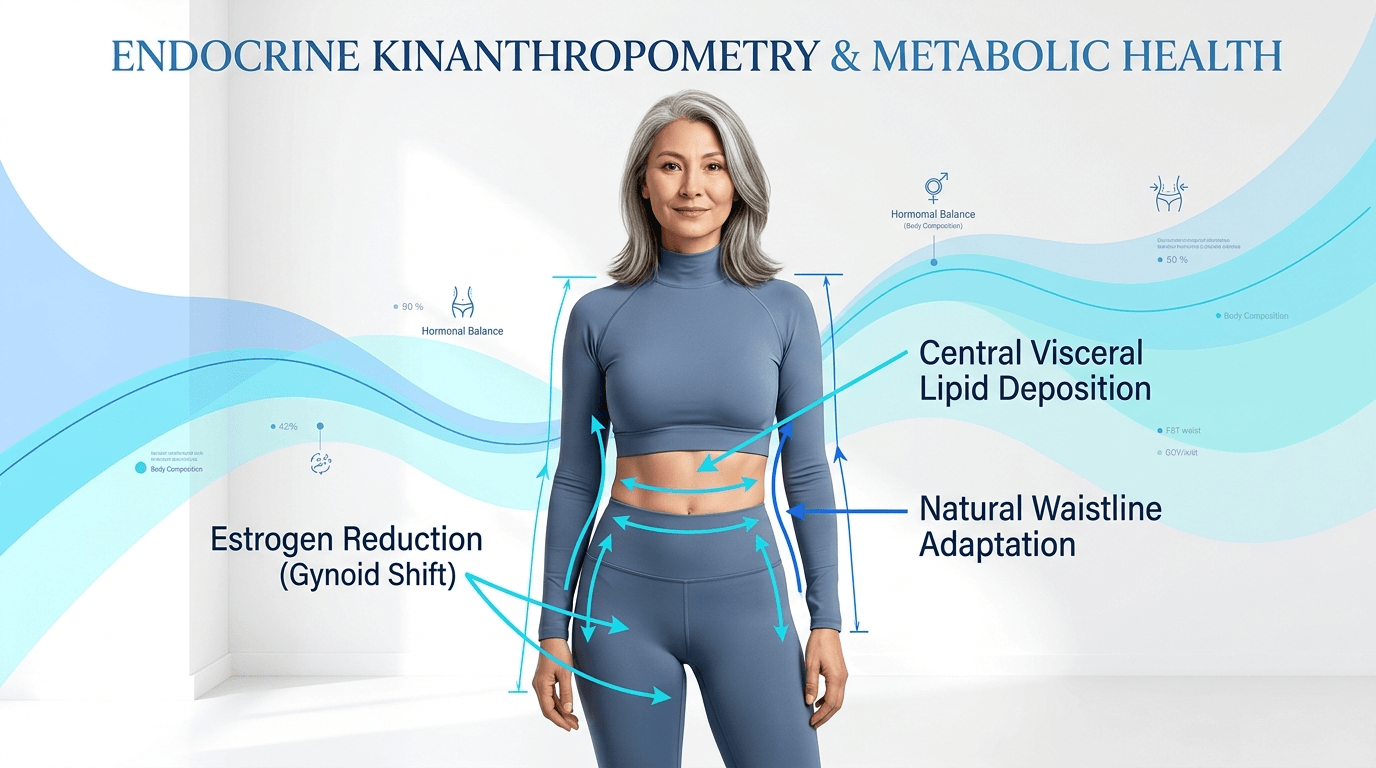
Constructed upon longitudinal clinical trials and endocrine metabolic surveys. Demonstrates why perimenopausal silhouette transformation—specifically the transition from gynoid (pear/hourglass) to android (apple)—is driven by the shifting androgen-to-estrogen ratio, not lack of willpower.
Why Does Body Shape Change After Menopause? (Direct Answer)
The midlife transition from a curved silhouette (Hourglass or Pear) to a more central, rounded silhouette (Apple or Oval) is driven by a profound endocrine shift in how your body allocates adipose tissue:
- Estrogen Reduction: Throughout reproductive years, 17β-estradiol directs fat storage preferentially toward subcutaneous gluteofemoral depots (hips, buttocks, and thighs). As ovarian estradiol synthesis plummets during perimenopause, this protective gynoid signaling ceases.
- Relative Androgen Dominance: Circulating testosterone and DHEA levels decline more gradually than estrogen. This relatively higher androgen ratio triggers an android fat storage pattern, shunting new and mobilized lipids directly into deep intra-abdominal visceral spaces around the liver and intestines.
- Age-Related Sarcopenia: Involuntary loss of skeletal muscle mass reduces resting metabolic expenditure by 2% to 4% per decade, causing the natural waist indentation to soften and widen.
Monitor your current waist-to-hip ratio using our interactive Body Shape & WHR Calculator.
The 3 Biological Drivers of the Menopausal Transition
1. Gluteal LPL Downturn
Without active estrogen stimulation, Lipoprotein Lipase (LPL) activity in the hips drops sharply, meaning the body stops channeling triglycerides into the lower half.
2. Visceral Cortisol Receptors
Mesenteric fat cells have a high concentration of glucocorticoid receptors. Chronic sleep fragmentation and vasomotor hot flashes increase cortisol, driving rapid central waist accumulation.
3. Vertebral Remodeling
Mild osteopenic compression of the lumbar vertebrae shortens the vertical space between the ribs and the pelvis, pushing abdominal contents outward horizontally.
Evidence-Based Strategies to Preserve Metabolic Proportions
Progressive Heavy Resistance Training
Lifting challenging weights 3 times weekly stimulates GLUT4 glucose transporters in muscle tissue independently of insulin, halting sarcopenia and burning visceral fat stores directly.
Dietary Protein Prioritization
Consuming 1.2 to 1.6 grams of protein per kilogram of body weight protects lean mass during midlife hormonal fluctuations and elevates diet-induced thermogenesis.
Check Your Waist-to-Hip Ratio on ToolWingz
Plug your tape measurements into our calculator to check your WHO cardiometabolic risk category and discover tailored styling guidance for your current proportions.
Educational Disclaimer: ToolWingz provides WHO waist-to-hip benchmarks for educational and health awareness.